Introduction
artist
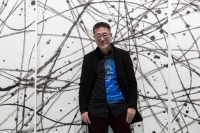
Wang Huangsheng
Wang Huangsheng inherited his family's scholarly traditions from a young age and earned a Ph.D. in Art History from Nanjing University of the Arts. He is a pioneer and foundational figure in the professional development of contemporary art museums in China, as well as a scholar and artist who has pioneered research in New Museology.
Currently he serves as Director of the New Museology Center at the Guangzhou Academy of Fine Arts, Professor and Doctoral Supervisor at the Central Academy of Fine Arts. He is a recipient of the Special Allowance from the State Council of China, a Museum Expert Advisor for the Hong Kong Leisure and Cultural Services Department, and a Distinguished Professor at Heidelberg University, Germany, among other positions. He has previously held the roles of Director of the Guangdong Museum of Art, Director of the Art Museum of the Central Academy of Fine Arts, and Chief Curator of the Art Museums at the Guangzhou Academy of Fine Arts. His accolades include the French "Ordre des Arts et des Lettres (Knight)," the Italian "Order of the Star of Italy (Knight)," and the title of "Outstanding Educator" from Beijing Municipality. Wang Huangsheng founded and curated major international biennials such as the "Guangzhou Triennial." His publications include monographs like The Art Museum as Knowledge Production, The New Art Museum: Concepts, Strategies, and Practices, 20 Years: Observing Guangdong Art.
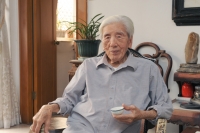
Wang Lanruo
Wang Lanruo
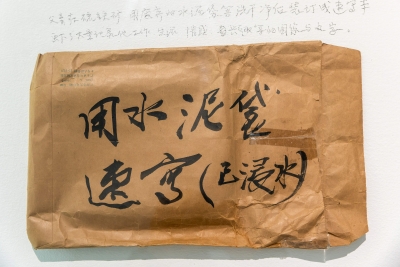
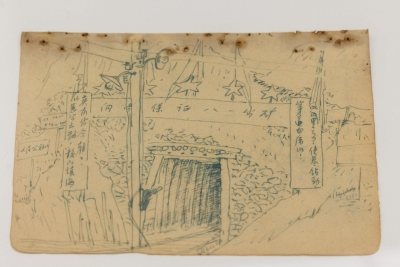
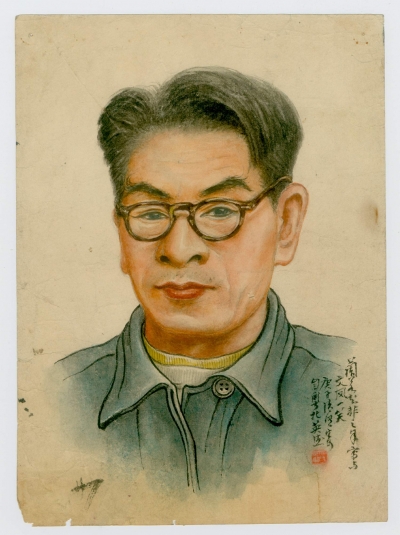
Renowned Chinese painter and art educator. Born in Jieyang, Guangdong, he studied at the Shanghai Art College in the 1930s, learning under masters such as Huang Binhong, Liu Haisu, Pan Tianshou, Zhu Wenyun, and Zhu Lesan. In 1947, Wang Lanruo traveled to Bangkok, Singapore, Penang, Kuala Lumpur, and other locations for sketching trips and held exhibitions, earning renown across Southeast Asia. Throughout his life, Wang Lanruo shared the fate of his family and nation, experiencing dramatic shifts in his artistic career. Despite this, he persistently dedicated himself long-term to art education and artistic creation in the Chaoshan region, where his students and disciples became numerous. He held dozens of solo exhibitions both in China and abroad, and his works are included in the collections of major museums, art galleries, and professional institutions such as The Palace Museum, the National Art Museum of China, the Beijing Academy of Fine Arts, the China National Academy of Painting, and the Guangdong Museum of Art.
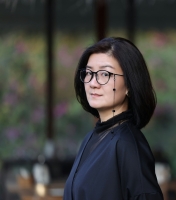
Chen Xiaoyang
Chen Xiaoyang
Ph.D. in Anthropology, Professor at the Guangzhou Academy of Fine Arts, Director of Art Museum. Her primary research areas include visual anthropology, South China studies, and socially engaged art practices. Her research and works often focus on the obscured histories and realities of communities, with a sustained interest in the study, dissemination, and reinterpretation of regional cultures in South China. In recent years, Chen Xiaoyang research focus has shifted towards exploring new museum practices and curatorial studies from the perspectives of anthropology, cultural history, and participatory development. She is particularly engaged with the history of cross-cultural exchanges and the art of diaspora communities. She is responsible for the coordination and curation of the Pan-Southeast Asia Triennial series.